

Walhalla Ravine Is a Work in Progress. It Always Will Be
Shared by Cindy Decker, Clintonville resident who helps care for Walhalla Ravine.
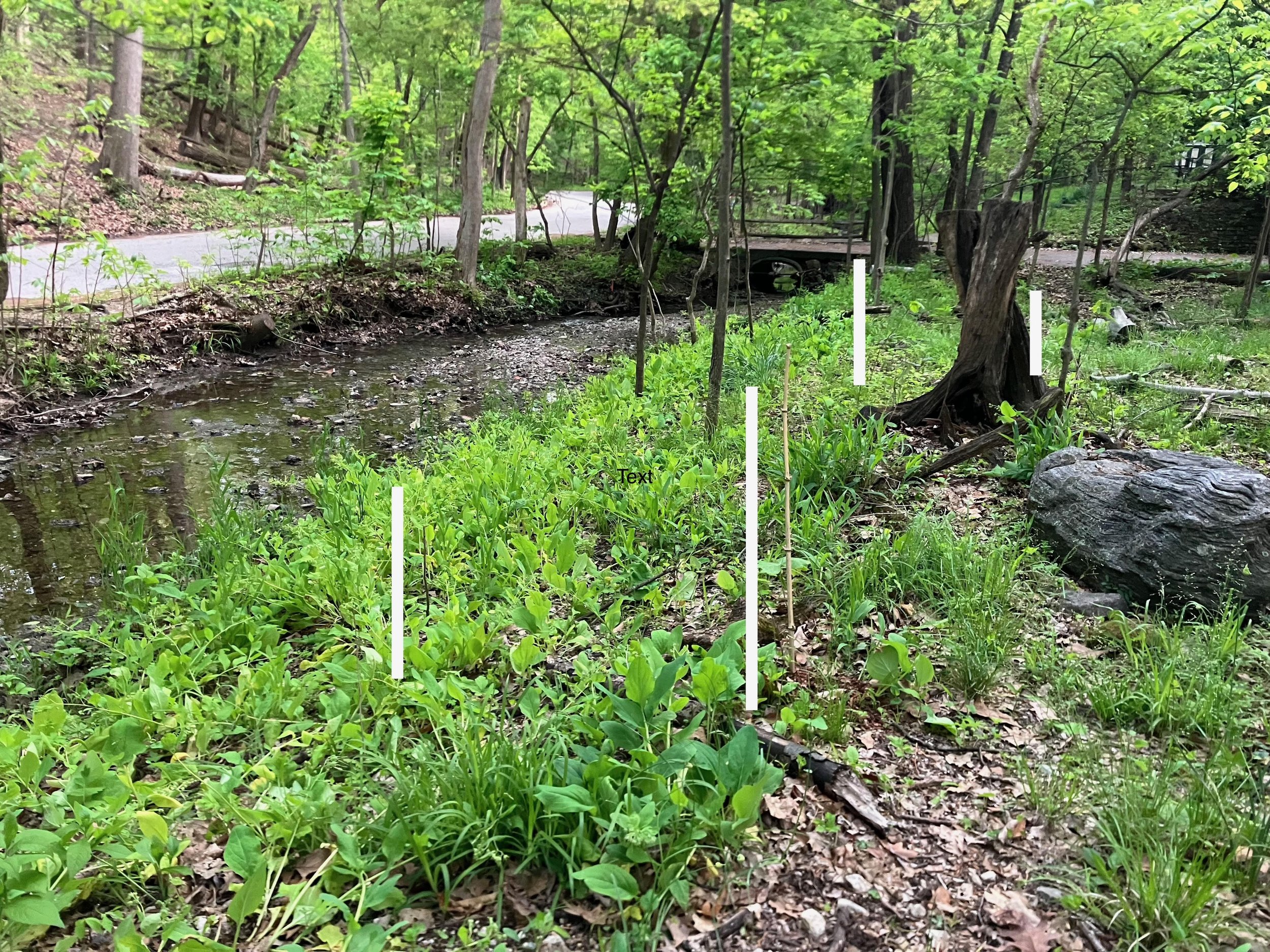
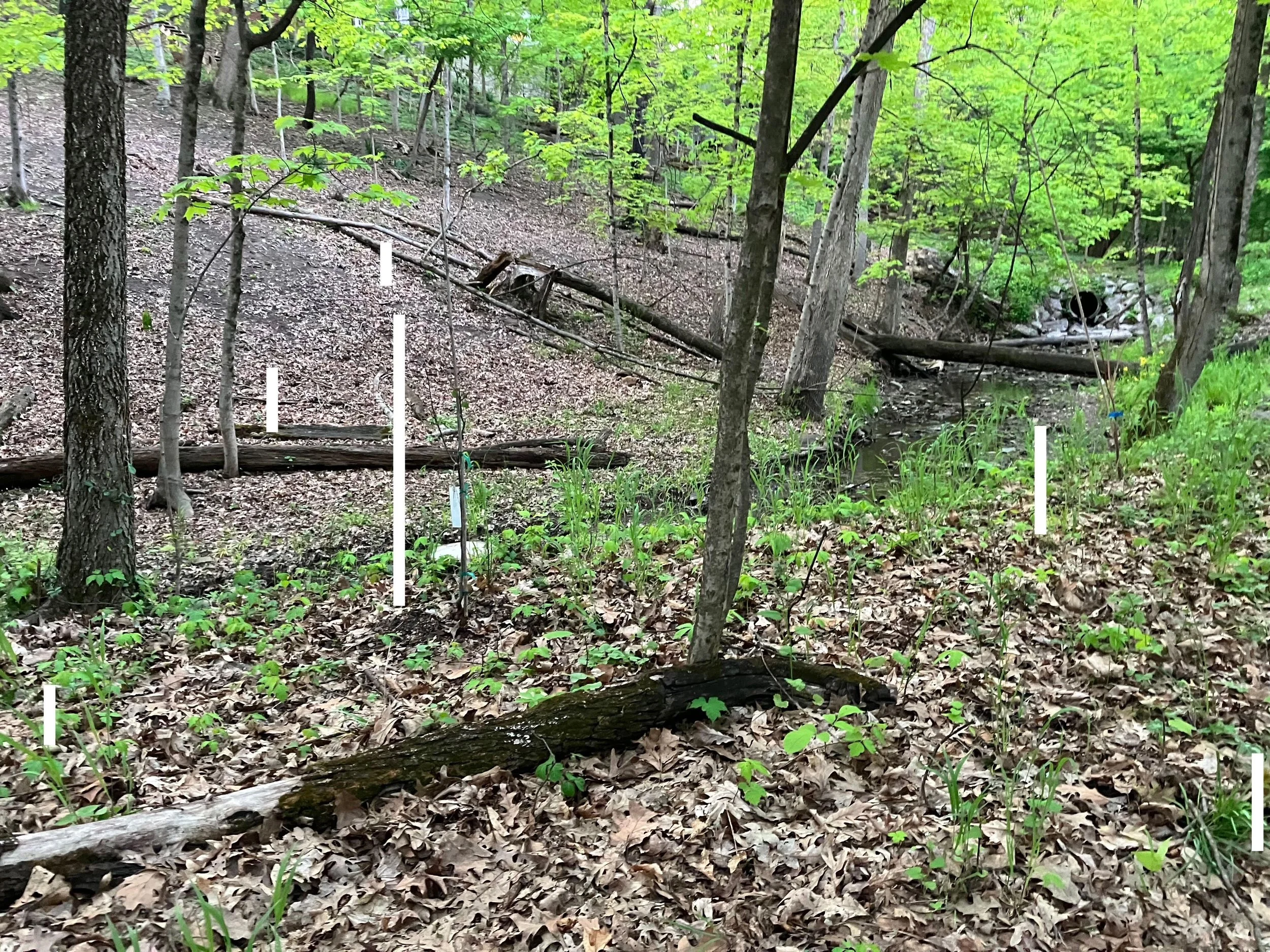
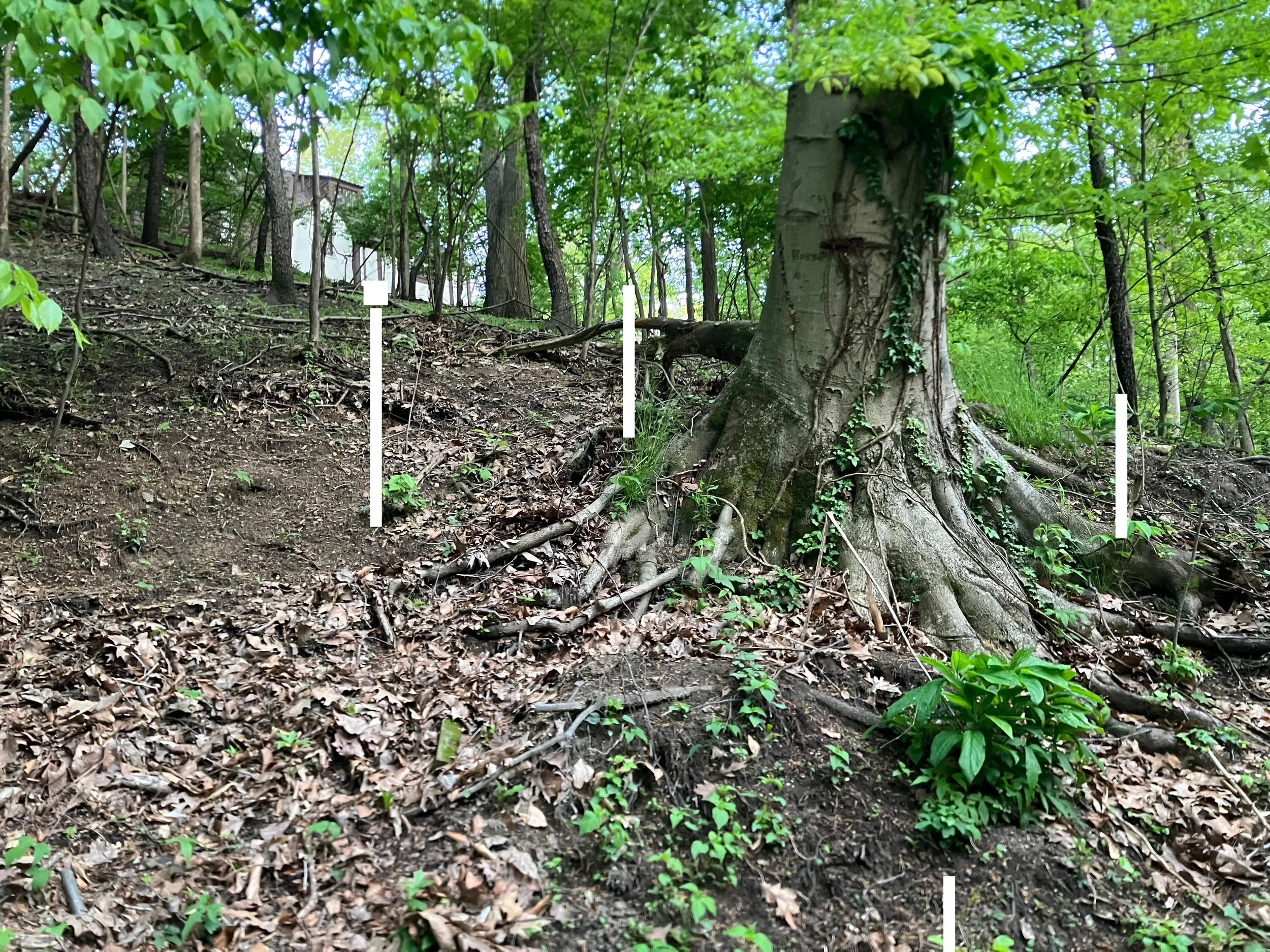
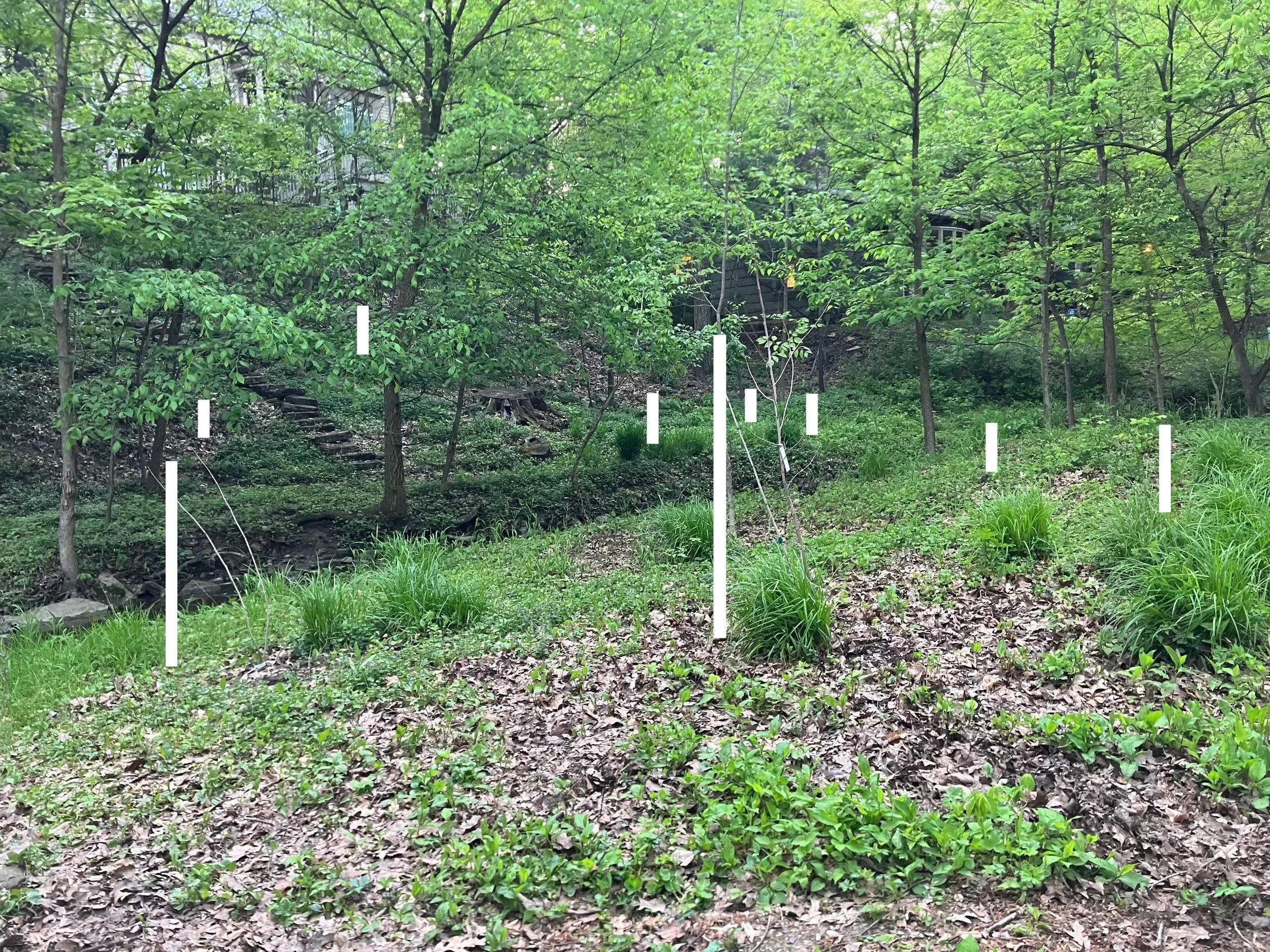
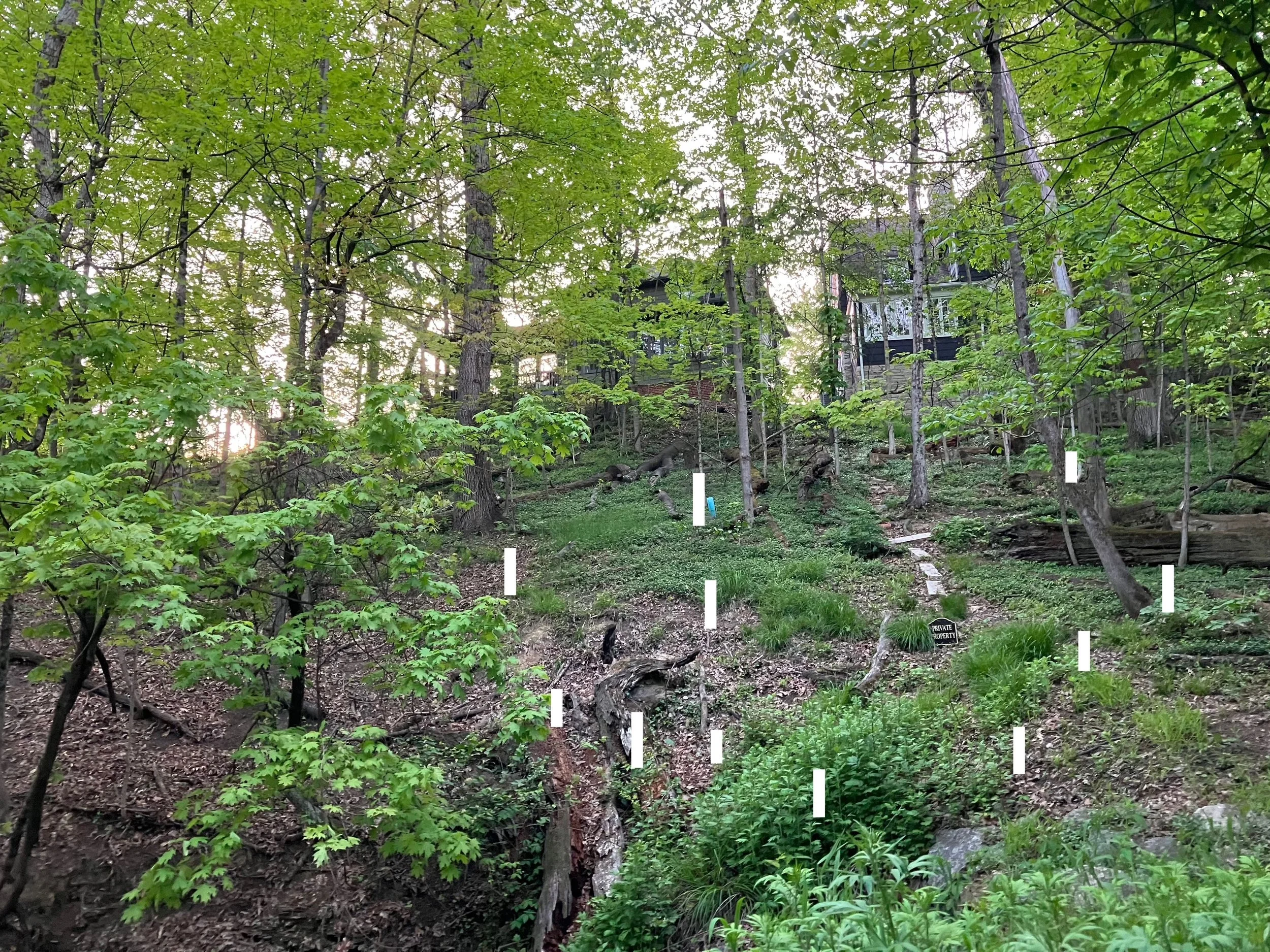
White boxes have been added to highlight the trees and shrubs, which can be difficult to spot in this lush, densely vegetated area. Photos by Cindy Decker.
“Walhalla Ravine in Clintonville is home to bluebells, trout lilies, barred owls, hawks, bluebirds, migrating warblers, and the occasional fox. It is a work in progress, and it always will be.”
The ravine is one of the wooded valleys that cut through Clintonville, carved by glacial meltwater thousands of years ago and now part of the lower Olentangy watershed. It looks and feels like a park, but it is not one. What keeps it standing is the work of the people who live around it.
Thanks to Green Columbus, Friends of the Lower Olentangy Watershed (FLOW), and dedicated residents, the ravine has helpers working to protect it. FLOW is a nonprofit founded in 1997 to protect the Olentangy River and the streams that feed it. Green Columbus supplies trees and shrubs. Neighbors supply the hours.
And the hours add up. In April and May 2026 alone, residents put in a combined 200 hours of work in the public right of way, picking up trash, pulling invasives, and planting trees.
A paradise for invasives
Walhalla's deep, rich, fertile soil is part of what makes it beautiful. It is also what makes it a paradise for every invasive species out there. On top of that, its trees are under pressure from pests, disease, pollution, climate change, and urban stressors like salt runoff from the road.
Over the past 15 years, members of the Walhalla Ravine Association have removed mountains of invasive growth: honeysuckle, multiflora rose, burning bush, privet, garlic mustard, English ivy, and now the biggest nemesis of them all, lesser celandine.
Lesser celandine (Ficaria verna) is a low-growing member of the buttercup family that was brought to North America as a garden ornamental in the 1800s. It is a spring ephemeral, which means it emerges early and dies back by the start of summer. That timing is the problem. It carpets the ground before native wildflowers can get going, forming dense mats that shade them out. The plants it crowds out are the same native spring ephemerals Walhalla is known for, including its bluebells and trout lilies. It spreads through small tubers and bulblets that travel easily in water, which makes ravines and streambanks especially hard to defend. Ohio lists it as an invasive plant, and it can no longer be legally sold or distributed in the state. Even so, once it takes hold, it is very difficult to remove.
Some progress, every year
Storms and a changing climate have brought down too many trees. But each year, residents make some progress.
The trees and shrubs from Green Columbus have not reached maturity yet. What they are already doing is filling in ground that used to be smothered under honeysuckle, multiflora rose, and euonymus. That is a real change, and anyone who walked the ravine 15 years ago can see it.
The work will never be done. We continue to fight.
Want to help protect places like Walhalla Ravine? Green Columbus hosts volunteer tree plantings across Central Ohio, and there's always room for more helping hands.
